Liquor Laws – You Can’t Make This Stuff Up
Chapter Fifteen, Part One.
 The liquor trade is a seriously regulated business. Liquor laws in New Jersey are enforced by Alcohol Beverage Control agents who carry automatic weapons. That may sound a little extreme, but these agents never know when they may encounter a rude convenience store clerk, or worse, an arrogant wine salesperson.
New Jersey laws are so strict that under NJ statute R.S. 39:4-50, people convicted of “Driving under the influence of alcohol or drugs, or while ability is impaired by alcohol or refusing to take a Breathalyzer test” are forbidden from purchasing vanity license plates for ten years!¹
Depending on where you live you may have to deal with substantial hurdles when seeking a little libation. In West Virginia for example, it is illegal to give a minor liquor unless you are related by blood or marriage, or the more likely scenario – both.
Read MoreWhen it Comes to Wood, Size Matters
Chapter Thirteen, Parts Three, Seven & Eight.
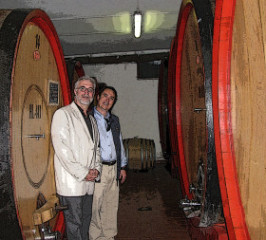
Surrounded by botti with Filippo Fedriani at Marchesato degli Aleramici in Montalcino.
Different wine regions use barrels of varying size to fit their needs (and maybe their warehouses). The volume of the popular Hogshead barrel seems to vary with every industry, but for wine it has come to mean a 63-gallon barrel, while the uniquely named butt barrel holds two Hogsheads or 126 gallons. The winemakers of Bordeaux find a barrel holding 59.4 gallons is perfectly suited for Cabernet and Merlot based wines. In Montalcino, where tradition dictates that Brunello di Montalcino be aged in cask for three years, wine is matured in large Slovenian casks called botte, or the plural botti, a term presumably derived from butt (those are 6 words I never imagined myself writing). Smaller barrels have a stronger impact on wine, so most Brunello producers use botti because they feel three years aging in small casks would produce overpowering oak flavors in the finished product.
Loving Wine, In Spite of Itself.

Look, I know the drill. I’ve been there myself. You’re in a wine store reading those little signs in front of each wine when you start to feel out of place, kind of like one of those Duck Dynasty guys who mistakenly wandered into a gay pride parade.
Shelf talkers, as they’re known in the trade, tout the virtues of the wine at hand and usually contain a wine review from a magazine or newspaper. As you read something like, “this wine displays aromas of galangal root caressed by nuances of Louisiana road tar,” you find yourself thinking, “I never smell and taste these things in my wine and what the heck is galangal root anyway?”
So I’d like to start by correcting a common misconception caused by these shelf talker wine reviews. No one slipped cat pee into your Sauvignon Blanc or horse manure into your Burgundy. They smell that way on purpose.
Really.
Read MoreThe Angel’s Share. It Will Be Mist.
Chapter Thirteen, Part Five.
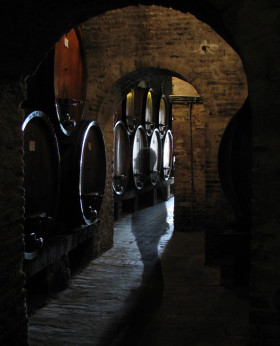 Centuries ago, Cognac producers learned that impermeable oak barrels were very good for keeping spirits in, but not very good at keeping spirits out. When cellarmasters discovered their precious product was disappearing from the barrels locked in their basements, they came to the logical conclusion that angels must be visiting the cellars and drinking from the heavenly casks. The missing portion became known as “la part des anges” or the “angel’s share”. I think most Cognac producers believe the 2% to 4% that disappears every year is fair compensation for the angel’s empyrean influence on their maturing brandy.
Two to four percentage points might not seem like much but it adds up over time. A single Cognac cask holds 263 bottles when full. Sixty years later the angel’s share will reduce that by 83 bottles, or approximately half the Cognac Busta Rhymes and Snoop Doggy Dog drink on Tuesday night. On the bright side, Cognac producers don’t have to pay tax on the missing spirit, leaving me to wonder; what does a line item deduction for angel’s consumption look like on a tax return?
Read MorePass The Toast – The Maillard Reaction in Wine Barrel Toasting.
Chapter Thirteen, Part Four.
 Not long after Kikunae Ikeda discovered umami, a French physician by the name of Louis Maillard (pronounced my-ARD) described the chemical reaction that takes place when amino acids combined with sugar are exposed to heat. This transformation, once known simply as browning, is now called the Maillard reaction. (It is rumored the original name, browning, was named after Maillard’s cook, Dorothea Brown.)¹
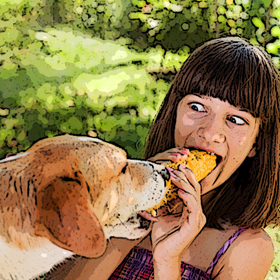
The Maillard reaction is what turns toasted bread a golden brown and creates the seared crust on protein rich foods like steak or chicken. I think my neighbor was grilling some protein rich food last night because I heard him say, “Hey Carter. Get your dog out of Maillard!”
Read More