Become A Wine Critic Superhero.
Chapter Four, Part Two.
 Wine critic Robert M. Parker Jr. sets the standard when it comes to sniffing out and describing the aromas found in wine. He has a unique gift for making aromatic associations and it’s not unlikely that he possesses the greatest olfactory memory banks in the wine trade. This might explain why he has become the most respected wine critic on Earth (and possibly on Krypton). What I’m trying to say is Robert Parker has memories like Wonder Woman has mammaries.
The Los Angeles Times summed it up best when they called Parker, “the most powerful critic of any kind, anywhere.” Wow! That really does makes him like, a wine critic super hero.
Faster than a speeding simile! More powerful than a loco-metaphor! Able to leap tall bibliographies that are single bound!
Read MoreWine Appreciation. It’s All About Paying Attention.
Chapter Four, Part One.
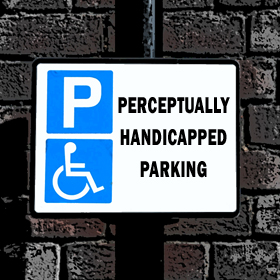 It’s an uncomfortable feeling. You’re in a fine wine store and when you look down at the shelf talker you get the uneasy feeling that the shelf talker is actually looking down at you. How can something as insignificant as a four-inch wine review make you feel like you should be parked in the perceptually handicapped space?
If you feel you’re not capable of perceiving the complex aromas and flavors found in wine, it’s likely that you simply haven’t been paying enough attention. It’s time for your palate to wake up and smell the rosés. Believe me, with some conscious effort and practice, you too can analyze and describe wine like a pro and then you’ll annoy all your friends, not just the ones who stick around to drink your classified Bordeaux.
Read MoreFlavor. Taste Is Only Half Of It.
Chapter Two, Part Six.
 Have you ever wondered how your palate is capable of identifying so many different flavors in food and wine since your taste buds are limited to just five basic stimulants? If your taste buds are only capable of discerning sweet, sour, salt, bitter and umami, why are wine reviews so wordy and wine magazines so thick? (Yeah I know, it takes a lot of ads to earn 90 points).
Your taste buds may be limited, but deciphering flavor employs much more than your sense of taste. It’s the synergistic work of olfaction and gustation that unite to interpret flavor. This phenomenon is commonly called gusfaction. I’m sorry but I can’t help myself, I like to combine big words because I don’t get paid by the word – I get paid by the punctuation mark (which is why I end every paragraph with parenthesis).
Read MoreYou Know Sweet, Sour, Salt, & Bitter, But Who’s Umami?
Chapter Two, Part Five.
 Experts have long believed you only perceive four tastes – sweet, sour, salt and bitter – but another taste was identified in Japan over 100 years ago that has only recently gained acceptance in gustatory circles worldwide. Umami is a subtle taste that’s easily masked by more assertive flavors. It is best described as meaty, satisfying and rich, which sounds kind of like the perfect date.
Western palates are generally unaccustomed to recognizing umami so don’t lose any sleep if you find it illusive. When I first learned of umami I undertook a grueling exploration that increased the scope of my taste nearly as much as it increased the scope of my waist. Believe me, it’s not the first time I’ve had to buy a few belts for this blog.
Read MoreGet In Touch With Texture; Tannin Versus Dryness.
Chapter Two, Part Three.
 Texture is paramount to appreciating wine so I put a great deal of emphasis on deciphering its tactile sensations. When describing wine make note not just of the aroma and taste, but of how the wine feels. Now I know a lot of you guys get a little queasy talking about your feelings, so I promise to get through this quickly, even if it takes all night.
Wines come in a variety of textures, some of which will appeal to you, and some of which will not. When you first taste wine ask yourself “How do I describe the texture of this wine?” Does it feel harsh or silky? Is it lean and austere or rich and flamboyant? Do you find it thin or fat, wimpy or muscular? The weight of wine is also perceived by your sense of touch. Does the wine feel light or heavy in your mouth?
Many wines are described as crisp in texture. You may like that quality in a Pinot Grigio or a $100 bill but dislike it in Grenache. Other wines are said to be creamy. Once again, this may be a desirable trait for Merlot or some Chardonnays but creamy is not a trait you look for in Navy seals or Grüner Veltliner.
Read More