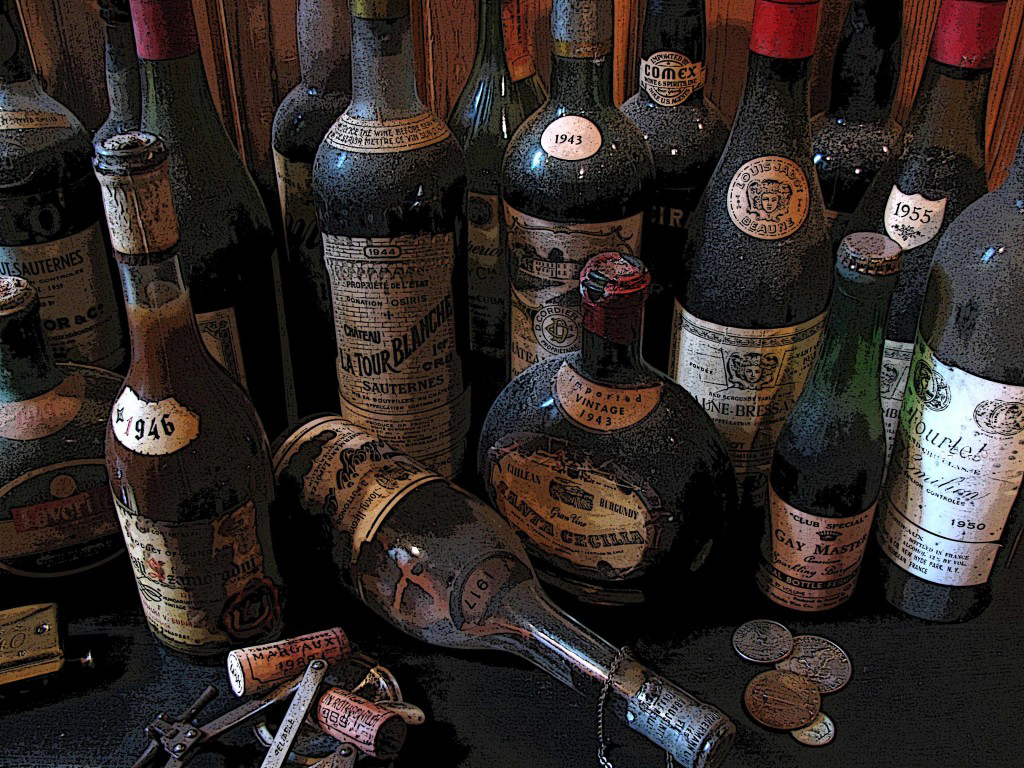

Quality Hangs In The Balance.
Chapter Three. Part Three.
 To enjoy a great symphony or painting you needn’t analyze each note or brushstroke; you should embrace the emotional impact of the whole piece. It’s up to the snobby enthusiasts, historians and critics to pick apart the elements behind the artwork and ruin it for the rest of us. Hey, somebody’s gotta do it.
Wine is much like music and art in that it is best appreciated when approached holistically. Unless of course, you’re one of those wine aficionados that spends all day in wine chat rooms when you’re supposed to be watching the kids. In that case you’re going to pay close attention to the individual elements inherent in wine so that, much like a music or art critic, you can bore your friends into a catatonic stupor with your insightful analysis. Thank God I’m here to help.
Let’s face it. When it comes to wine you’d probably like to be more like me – except that you’d want to bathe more often and
Read MorePain & Sulfuring.
Chapter Twelve. Part Six.
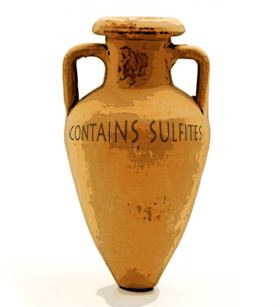
Contrary to public opinion, wineries didn’t start adding sulfites to wine in 1987. That’s simply the year the US government dictated all wine containing more than 10 ppm, the smallest detectable amount at the time, be labeled with the warning “contains sulfites.”¹ If a winery can produce wine with less than 10 ppm of detectable sulfites they can forgo the warning label. I’ve sold organic wine for years and only once have I seen a label that read, “contains no detectable sulfites”. It may have been a misprint as the label should have read, “contains no detectable flavor”.
The warning label only applies to wines sold in America, leading many consumers to mistakenly believe that just those bottles destined for America are adulterated with sulfur while their European counterparts remain sulfite-free. The European Union has recently instituted a similar sulfur warning label so the idea that they are sulfite-free should soon be exposed as a myth – just like the idea that vampires can’t go out in daylight (like, have you even seen Twilight?).
Read MoreNew Year’s Eve, A Pahlmeyer Tasting & Downton Abbey.
 For New Year’s Eve I decided to spend the night in quiet meditation while channeling my inner tranquility, by which I mean I got more fried than a Paula Deen chicken.
I did this with some friends who are selling their house up north and want to thin out the wine cellar so they won’t have to move it. They don’t know how many wines are stacked down in the basement but I told them that given a few days we could get to the bottom of it. So a bunch of us headed north to usher in the New Year by ushering out some old wines. By the way, this is a service that I offer people in need of wine cellar cleansing. The service is free, but only for those who can afford it.
Read MoreOf Esters & MLFs.
Chapter Twelve. Parts Three & Four.
The Ester Ouster
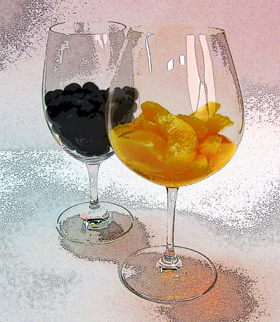 So what makes Cabernet Sauvignon smell like black currants and Viognier smell like peaches? The answer is only skin-deep – much like Jessica Simpson’s appeal or an outbreak of shingles.
The cellular make-up of grape skins hold barely detectable aromatic compounds that are magnified during fermentation. Without fermentation these compounds would remain trapped inside the grape skins and then this would be a boring blog about grapes that no one will read … as opposed to a boring blog about wine that no one will read.
The cellular make-up of different grape varieties translates into aromas that are unique to that variety. During fermentation these compounds interact with yeast, alcohol and acids to create flavor substances known as esters. These esters also develop and evolve after fermentation, as chemical reactions continue to take place as wine ages. I also continue to develop new chemical reactions as I age but I control them with Depends.
Read MoreMaceration Makes Me Blush.
(But It Can Also Make Me Red Or White Or Even Orange)
Chapter Twelve. Part Two.
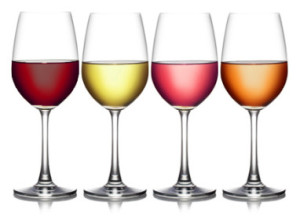
Raise your hand if you think red grapes are filled with red grape juice. Raise your other hand if you think rosé or blush wines are made from pink grape juice. If you have both your hands raised, do the hokey-pokey and turn yourself around because almost all grape juice, whether from white or red grapes, is clear (which is more than I can say about my writing).
As long as I’m straightening out this whole color thing, let me add white grapes are really green, yellow or orange, red grapes are referred to as black but the liquid and skins combine to produce purple juice. Got it? You can put your hands down now.
Years ago when I was studying for a WSET exam I bought a book about fermentation but I found it pretty useless … until I decided to read it. If you want to learn a thing (or two) you’re going to have to click this little read more button…
Read More