You Know Sweet, Sour, Salt, & Bitter, But Who’s Umami?
Chapter Two, Part Five.
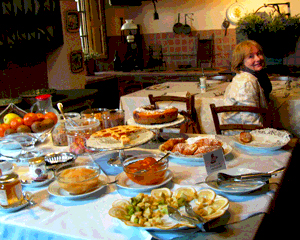 Experts have long believed you only perceive four tastes – sweet, sour, salt and bitter – but another taste was identified in Japan over 100 years ago that has only recently gained acceptance in gustatory circles worldwide. Umami is a subtle taste that’s easily masked by more assertive flavors. It is best described as meaty, satisfying and rich, which sounds kind of like the perfect date.
Western palates are generally unaccustomed to recognizing umami so don’t lose any sleep if you find it illusive. When I first learned of umami I undertook a grueling exploration that increased the scope of my taste nearly as much as it increased the scope of my waist. Believe me, it’s not the first time I’ve had to buy a few belts for this blog.
Read MoreGet In Touch With Texture; Tannin Versus Dryness.
Chapter Two, Part Three.
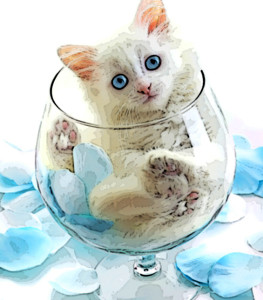 Texture is paramount to appreciating wine so I put a great deal of emphasis on deciphering its tactile sensations. When describing wine make note not just of the aroma and taste, but of how the wine feels. Now I know a lot of you guys get a little queasy talking about your feelings, so I promise to get through this quickly, even if it takes all night.
Wines come in a variety of textures, some of which will appeal to you, and some of which will not. When you first taste wine ask yourself “How do I describe the texture of this wine?” Does it feel harsh or silky? Is it lean and austere or rich and flamboyant? Do you find it thin or fat, wimpy or muscular? The weight of wine is also perceived by your sense of touch. Does the wine feel light or heavy in your mouth?
Many wines are described as crisp in texture. You may like that quality in a Pinot Grigio or a $100 bill but dislike it in Grenache. Other wines are said to be creamy. Once again, this may be a desirable trait for Merlot or some Chardonnays but creamy is not a trait you look for in Navy seals or Grüner Veltliner.
Read MoreThe Wine Review Review #1.
 WineSnark recently turned four months old and as I looked over the results I found a few surprises. I learned that my favorite posts are not always your favorite posts. Where I like the snarcastic posts such as “Wine Gladdens The Heart Of Man” or the creative posts like “The History Of Wine And Food Pairing” many of you preferred posts that featured wine reviews – like “Spot The Frog“.
Oddly enough I’ve often been told “I didn’t know WineSnark reviewed wines” and those who did read the reviews often remarked “Maybe WineSnark shouldn’t review wines.”
For those readers who never get to the bottom of the page where the wine reviews are usually located I’ve decided to create a new feature called “The Wine Review Review.” Every few months I’m going to present the best wine descriptions from recent WineSnark reviews, but rather than bore you with the same redundant language found in every other blog or wine magazine I’ve distilled these down to their snarky core.
Without further ado here are,
30 Wine Descriptions You’ll Never Read In The Wine Spectator
Read MoreWineSnark.com Is A Finalist For “Best New Wine Blog.”
 WineSnark.com has been named a finalist for the Wine Blog Awards “Best New Wine Blog“. You can vote for your favorite new wine blog, or you can vote for WineSnark.
In recognition of this prestigious honor I have chosen today to reveal my humble beginnings …
WineSnark.com has been named a finalist for the Wine Blog Awards “Best New Wine Blog“. You can vote for your favorite new wine blog, or you can vote for WineSnark.
In recognition of this prestigious honor I have chosen today to reveal my humble beginnings …
Wise-Ass 101 or How I Found My Voice.

I don’t know how they know these things, but when my brother was born the doctor told my mother he would grow up to be very tall. When I was born he told my mom I would grow up to be a wise-ass.
In hindsight it shouldn’t have come as a surprise when I recently realized the truth in something a wise man said to me many years ago. That man was Mr. McCracken, my seventh grade science teacher, and what he said was, “Carter, you’re a wise-ass. You always have been and you always will be.”
You know what a wise-ass is, don’t you? He’s the guy who always has the snarky answer – the smart-alec, the class clown, the wisenheimer. McCracken had me pegged on the first day of class. We engaged in many battles of wit, but to level the playing field I fought with my right brain tied behind my back.
Read MoreLet Me Make This Clear; Racking, Fining & Filtering.
Chapter Twelve, Part Seven.
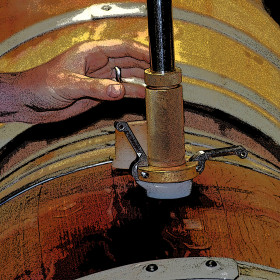 Once wine has fermented in a barrel, or been transferred into a barrel for aging from a fermentation vessel made of stainless steel, cement, or your bathtub, sediment will gradually form and settle to the bottom. If this thick, burgundy-hued sludge isn’t separated from the wine it could end up in your wine glass. Then it would only be a matter of time until Riedel introduced a line of spoons to go with their stemware.
To get rid of sediment and other unwanted byproducts, most wine is racked, fined and filtered before bottling.
Read More