Let Me Make This Clear; Racking, Fining & Filtering.
Chapter Twelve, Part Seven.
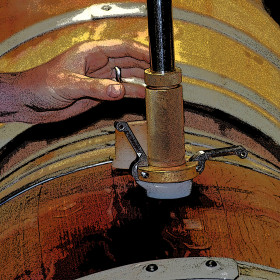 Once wine has fermented in a barrel, or been transferred into a barrel for aging from a fermentation vessel made of stainless steel, cement, or your bathtub, sediment will gradually form and settle to the bottom. If this thick, burgundy-hued sludge isn’t separated from the wine it could end up in your wine glass. Then it would only be a matter of time until Riedel introduced a line of spoons to go with their stemware.
To get rid of sediment and other unwanted byproducts, most wine is racked, fined and filtered before bottling.
Read MoreGetting ‘Stuck’ In Napa, Then A Visit To Rombauer Vineyards.
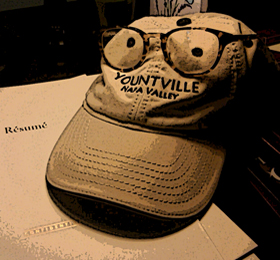
Last night I threw my glasses on the nightstand and then had the strangest feeling that someone was watching me.
Sometimes fermentations get stuck. The winemaker has all of the ingredients in place, the yeast organisms are happily gorging themselves on grape sugars and (cue the heavenly trumpets) wine is being born.
Then it stops.
Finicky yeast organisms can become dormant for any number of reasons. The temperature may get too high or the grapes might be too ripe. Whatever the reason, the results are the same and the winemaker starts pounding down Rolaids faster than Kathy Lee Gifford pounds down Chardonnay.
Well maybe not that fast.
Read MoreThere’s No Accounting For Taste.
Chapter Two, Part Four.
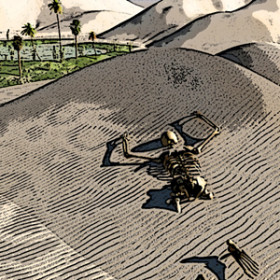 Imagine you’re sitting at a desert resort when you spot a man dragging his haggard body across the sand. The tattered remains of his clothes cling to his emaciated body. His face is covered by a week-old beard. He looks up at you pleadingly.
“Good Lord man!” you cry. “You must be thirsty. Here, have some wine!”
In a raspy voice he croaks, “How many points did it score?”
Now I don’t want to get off on a rant about the wine rating system, but have you ever noticed that a wine that tastes great to The Wine Spectator or The Wine Advocate doesn’t always taste so great to you?
Read MoreThe History of Wine & Food Pairing.
Chapter Nine, Part One.
 In the beginning God said, “Let there be white.” And there was white.
And God tried the white, and it was good. And God divided the white from the red, and God was pleased when Robert Parker rated them both 90 points.
And God formed Adam and Eve and placed them in the Garden of Eden.
And Adam said unto Eve, “God has blessed us with both white and red. Hast thou chosen one to compliment this apple?”
“Thy yonder slithering-sommelier suggests Zinfandel,” said Eve.
“That’s original, Zin!” cried Adam.
And so it began, the age-old debate over which wine to serve with dinner. To guide the perplexed people through this culinary quandary, rule-makers stepped forward and created The Rule. They righteously preached that wine and food pairing is done with your eyes and not your mouth, for they looked at wine and decreed; White wine with fish. Red wine with meat!
Read MoreThe Nose Knows.
Chapter Two, Part Two.
 The most revealing aspect of wine analysis comes from olfaction, the sense of smell. Odorants are sensed by olfactory receptor neurons in the nose, or as they’re more commonly called, smell buds. O.K., I just made that up. They’re not really called smell buds, but it’s my blog and I’ll call them whatever I want. Besides, olfactory receptor neuron sounds like some kind of hi-tech weapon used to deduce wines complex aromas, you know, one of those weapons of mass deduction.
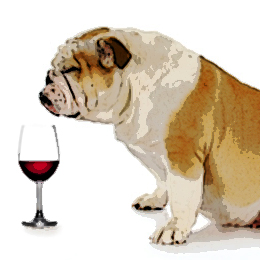
Humans possess about 40 million smell buds. To put that in perspective your average dog has about 68 billion smell buds, yet oddly enough there are only a couple of dogs writing for The Wine Spectator.
Read More