Pass The Toast – The Maillard Reaction in Wine Barrel Toasting.
Chapter Thirteen, Part Four.
 Not long after Kikunae Ikeda discovered umami, a French physician by the name of Louis Maillard (pronounced my-ARD) described the chemical reaction that takes place when amino acids combined with sugar are exposed to heat. This transformation, once known simply as browning, is now called the Maillard reaction. (It is rumored the original name, browning, was named after Maillard’s cook, Dorothea Brown.)¹
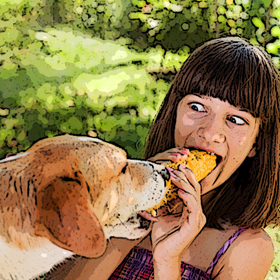
The Maillard reaction is what turns toasted bread a golden brown and creates the seared crust on protein rich foods like steak or chicken. I think my neighbor was grilling some protein rich food last night because I heard him say, “Hey Carter. Get your dog out of Maillard!”
Read MoreCan’t See The Forest For The Lees – Of Oak, Wine & Bacon.
Chapter Thirteen, Part Two.
“Oak is here and it will be with us for at least the remainder of the current generation—a generation that has been carefully taught that if a little oak is a good thing, a lumber factory is wonderful.” Dan Berger
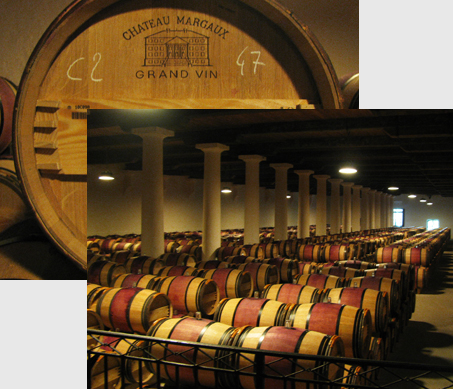
Wood barrels have been used by the wine trade for over two thousand years, but just over a century ago astute winemakers recognized the transformative effect that oak has on wine and they began to look at barrels as more than storage vessels. Over time, patient old-world vignerons learned that the species of oak, outdoor seasoning, the degree of toasting over fire and the time spent in barrel all bear heavily on how oak “flavors” wine. They learned that one type of oak may add spicy allspice and cinnamon nuances while another may add a smoky bacon flavor. I don’t know about you but I’d eat my left foot if it had a smoky bacon flavor.
Read MoreOak – The Grandfathered Ingredient.
Chapter Thirteen, Part One.
“Oak in wine should be like a ghost in a chateau; you sense its presence, but you don’t actually recognize it.” Pierre Seillan
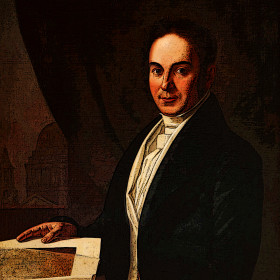
Manoel Pedro Guimaraens.
Before his untimely death in 2002, I had lunch with Bruce Guimaraens, the fifth generation winemaker for the esteemed port houses Fonseca and Taylor-Fladgate. Guimaraens was the great, great grandson of Manoel Guimaraens, who founded Fonseca-Guimaraens in 1822. I probably think being a great, great grandson is a big deal because I was never a great, great grandson; I was just an average great grandson.
Read MoreThe Salt Conundrum In Food & Wine Pairing.
Chapter Nine, Part Eight.
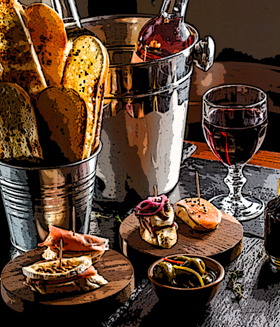 When pairing food with wine, sweet and sour tastes fall neatly into the cancellation category, bitter and piquant are subject to the cumulative effect, and umami is best grouped with neutral pairings, but what about salt? In moderation, salt doesn’t seem to have any conspicuous consequence, but how does excessive saltiness in food affect the taste of wine? To learn how (or if) salt fits into the A. cancellation, B. cumulative or C. neutral categories, I invited some friends over for some organoleptic research. They quickly declined until I told them that meant we were going to eat and drink wine.
Good old fashioned research is difficult and time consuming but in the name of conscientious reporting the WASTED team (Wine Snark Academy for Sensory Testing, Evaluation & Debauchery) created a salty feast and drank five bottles of wine because that’s the kind sacrifice we’re willing to make in the name of, umm … science, yeah that’s it, science.
Read MoreThe Neutral Effect In Food and Wine Pairing.
Chapter Nine, Part Seven.
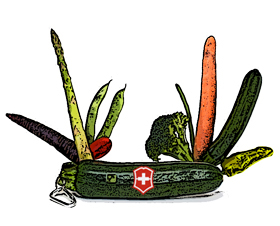
The impact of the chemical reactions taking place in your mouth when you combine food and wine can be very obvious when you’re experiencing the cancellation effect or the cumulative effect, but there’s another interaction between food and wine that’s just as rewarding, but much less pronounced. I call this subtle interplay the neutral effect. I realize that describing a food and wine pairing as neutral sounds sort of, well … neutral, but that doesn’t mean these combinations are boring. Neutral pairings occur when similar flavors come together in a safe, reassuring place, sort of like Switzerland.
Read More